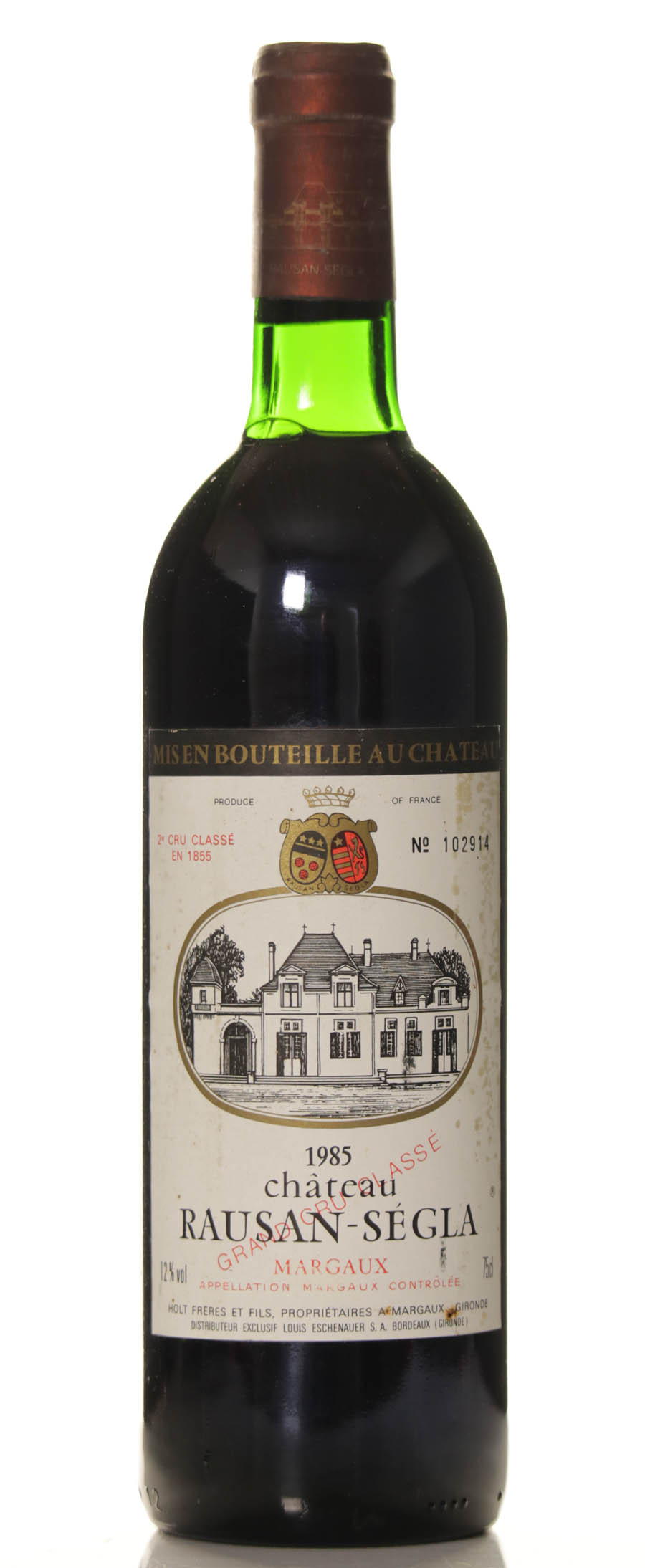




Labels
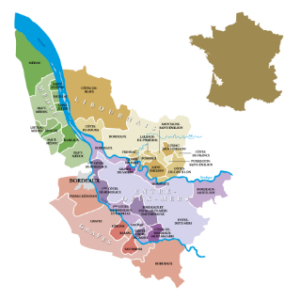
Bottles from Bordeaux
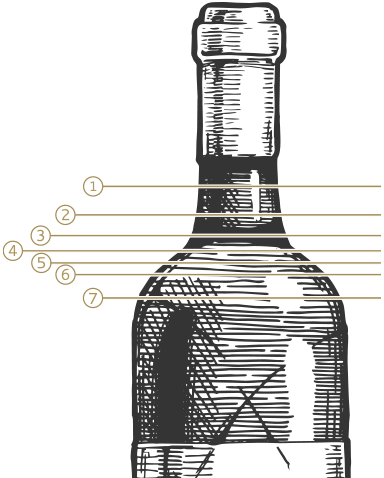
The terms below are indicative of the fill levels:


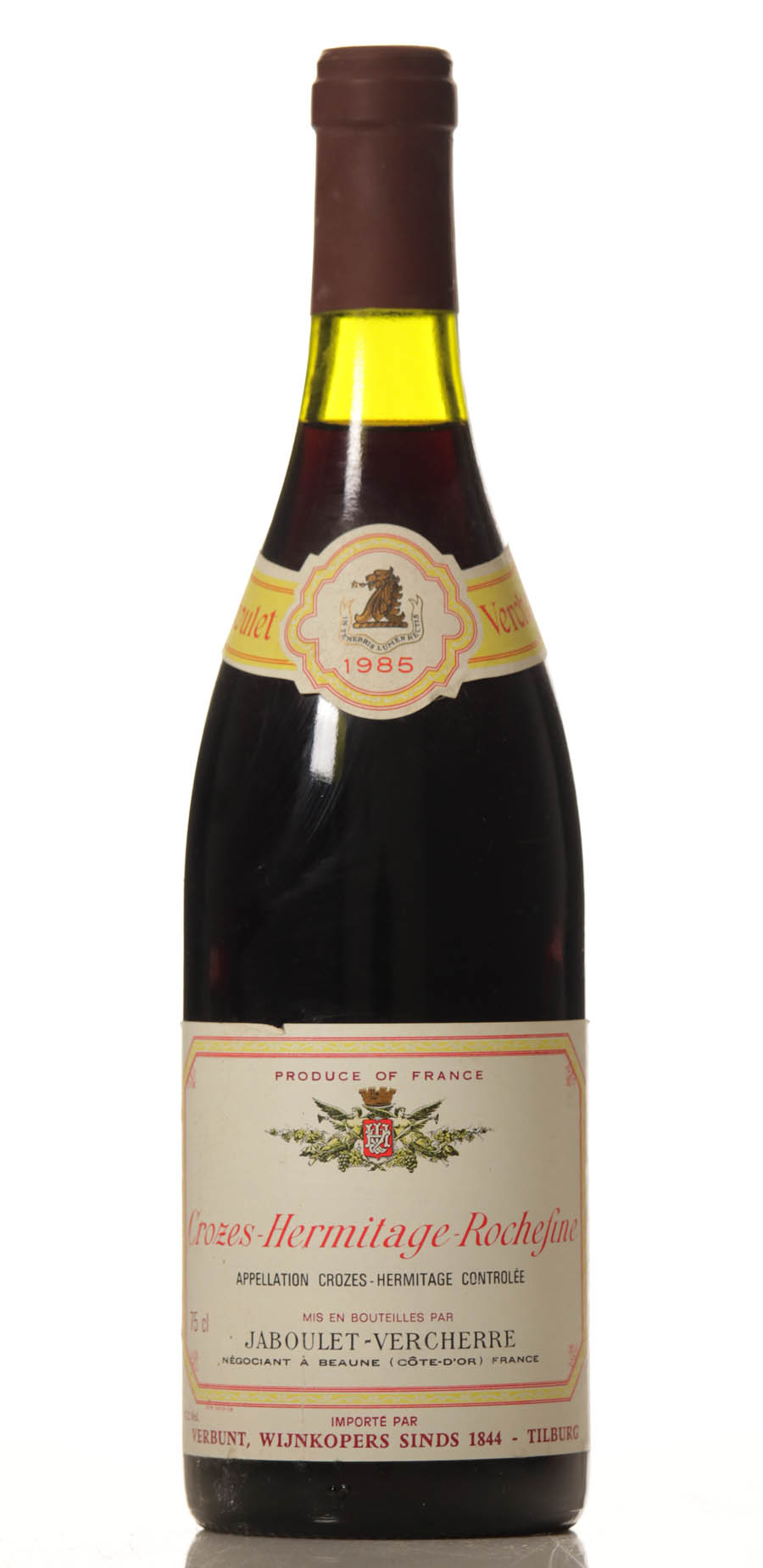
Hermitage Rochefine 1985 Jaboulet Vercherre
En rupture de stock
Prévenez-moi dès que ce vin sera de nouveau disponible
Caractéristiques
| Country | |
|---|---|
| Region | |
| Sub Region | 2729 |
| Bottling | Estate Bottled |
| Type of Wine | Red wine |
| Vintage | |
| Bottle size | 0.75 L |
| Packaging | Loose |
| Rating Scale | – |
| Rating | – |
| Reviewer | – |
| Capsule | good condition |
Level |
-2 cm |
Hermitage is a small appellation with 140 hectares (345 acres) of vineyards, responsible for France’s most enduringly prestigious wines. These are on a par with those from the Côte Rôtie (30 miles/45km to the north), and Châteauneuf-du-Pape (70 miles/110km to the south). Both red and white Hermitage wines are long-lived and full-bodied.
The red wines, which may be aged for 30 years or more, are often produced exclusively from Syrah, tough regulations permit up to 15 percent of the white grape varieties Marsanne and Roussanne. They are known for their robustness and rich aromas of leather, coffee and red berries.
The whites are less famous than the reds, but do account for about one third of AOC Hermitage’s annual production. They can usually be cellared for about 15 years, have aromas of honeysuckle, tropical fruit and earthy minerals. They are made predominantly from Marsanne, with limited use of Roussanne.
Hermitage also produces “vins de paille” (straw wines) – sweet white wines made from Marsanne and Roussanne grapes that have been dried out in the sun on straw mats. These wines are expensive because of the labor-intensive processes required to create them, but they are also rich, full flavored and very long-lived. Produced only in warmer years, Hermitage vins de paille are strictly forbidden to undergo chaptalization at any time.
The whole of the granite hillside where the Hermitage vineyards are planted faces south, overlooking a short section where the river Rhône flows west to east, not north to south. This orientation means that the grapes benefit from the maximum amount of sunlight throughout the day. The town of Tain l’Hermitage sits between the vineyard slopes and the water.
The Hermitage zone is bordered to the north by the vineyards of AOC Crozes-Hermitage. These vines are sited in flatter areas, with varying exposures, and the north-facing side of the hill of Hermitage.
The topsoil on the slopes is relatively thin compared to that of the valley floor. There are a wide variety of soil types – ranging from sandy gravel in the west, to rockier areas higher up and limestone in the center. As intense Rhône sunshine warms the hillside during the day, the granite bedrock stores this heat, encouraging the grapes to ripen more fully than those in less-exposed sites. The effect of the local terroir is most pronounced on the western side of the hill; it is steeper than the east and enjoys prolonged exposure to afternoon sunshine.
The appellation is divided into a number of vineyards. Les Bessards is at the western end, while Bessards, Le Méal, Les Greffieux and Murets lie to the east. L’Hermite and La Chapelle take up the top of the slope. The latter is named after a chapel built in honor of Saint Christopher which is owned by the negociant firm Paul Jaboulet Aîné, whose top cuvée is La Chapelle. The appellation takes its name from the legend of the crusading knight Gaspard de Stérimberg, who returned home, wounded, from the Albigensian Crusade in 1224. He was allowed by the Queen of France to build a small refuge on the hillside, where he lived as a hermit.
Jaboulet is one of four producers who rather dominate the appellation in terms of vineyard ownership. Two are also negociant firms; Delas Frères (now owned by Louis Roederer) and M. Chapoutier. The other is Domaine Jean-Louis Chave.
The prestige of Hermitage (sometimes Ermitage) wine can be clearly traced back to the 17th Century, when it was an official wine in the French courts of King Louis XIII and his successor Louis XIV, the “Sun King”. Not just the monarchs’ preferred wine, it was also used as a gift for visiting dignitaries and foreign royalty. It was no less respected across the English Channel, as confirmed by Thomas Shadwell’s comedy of 1680, ‘The Woman-Captain’. In the play’s opening scene, the wealthy Sir Humphrey and his friend Bellamy cite ‘Champaign and Burgundy…and Hermitage’ wines as superior to those of ‘Langoon and Burdeaux’ which they deem suitable only for ‘porters and carriers’. Sir Humphrey later boasts ‘I do confess I am an epicurean’. The wine’s high status remained untouched for a full two centuries after this. It peaked in the mid-19th Century, just as the famous wines of Bordeaux’s Médoc were beginning their rise to stardom.
Before the name “Hermitage” was granted international legal protection, it was used by wineries in various regions around the world, valued for its connotations of high quality. A high-profile example is Australia’s famous ‘Penfolds Bin 95 Grange’, which was labeled as ‘Grange Hermitage’ right up until 1989.